
Dog Pulmonary Fibrosis ( Canine Idiopathic Pulmonary Fibrosis – CIPF ) is a chronic and
progressive respiratory disease in which the lung tissue is scarred that causes a hindrance of
oxygen uptake and difficulty in breathing. The idiopathic term indicates that the precise cause is
not known thus the disease is very difficult to prevent and treat. The lungs can no longer expand
and contract efficiently to help in the process of breathing after a period of time, this causes
breathing to be inadequate and in the long run, the respiratory system fails.
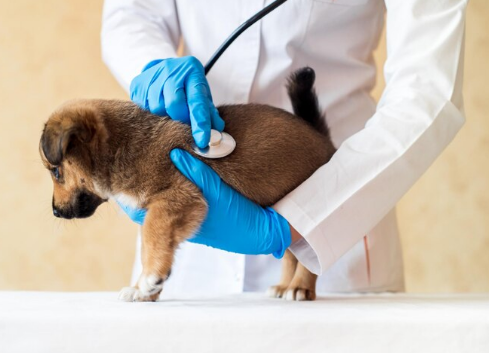
Older small and medium-sized breeds
are most likely to contract this disease, particularly the
West Highland White Terrier (Westie), and in the case of this breed, it can be commonly known
as the Westie Lung Disease. Additional breeds that can acquire the condition are Staffordshire
Bull Terriers, Cairn Terriers and Boxers. Pulmonary fibrosis is unlikely in other dogs, but it may
occur in any type of dog, regardless of gender or age, especially as the lungs begin to
deteriorate due to age.
Canine idiopathic pulmonary fibrosis
has a lot of similarity with human idiopathic pulmonary
fibrosis (IPF) not only histologically, but also regarding their progression. Due to this reason,
veterinarians and researchers researches the CIPF so that they can not only enhance the
treatment of cows but also improve the knowledge of the human manifestation of the ailment.
Causes and Risk Factors
The etiology of pulmonary fibrosis in dogs is mostly unknown, however, there are a
number of theories which have been put across:
➔ Genetic predisposition:
There is a strong genetic part that is thouught to influence the
illness and Westies appear to be specially susceptible to it, it is possiblethrough inherited
mutations that may impact on immune function or collagen metabolism.
➔ Chronic inflammation:
A continual inflammation of the lung tissue can cause an
abnormal healing process which leads to fibrotic scarring.
➔ Environmental factors:
Repeated damage to alveoli may occur due to long-term
exposure to irritants that may include tobacco smoke, dust, air pollution, and fumes.
➔ Infectious agents:
Previous or old infections, be it viral or bacterial, can leave traces of
inflammation which initiates fibrosis.
➔ Changes according to age:
Age reduces the elasticity of the lungs, and the immune of
the dogs is weakened, which makes them more prone to fibrosis.
● Although none of these factors can be used to explain all of the cases, genetics,
environment, and immune response interaction appear to be a decisive determinant of
the disease.
Pathophysiology (Illness Mechanism)
Pulmonary fibrosis is abnormality in wound healing of the lung parenchyma. When there is
injury in the lung which is minor, in a healthy lung, the alveolar cells regenerate and the tissue
healing is reinstated. In CIPF, however, this process of repair fails. Rather than the usual tissue
regeneration, fibroblasts and myofibroblasts go on overdrive and synthesize too much collagen
that stiffens and thickens the alveolar walls.
➔ This may be defined in a number of major steps:
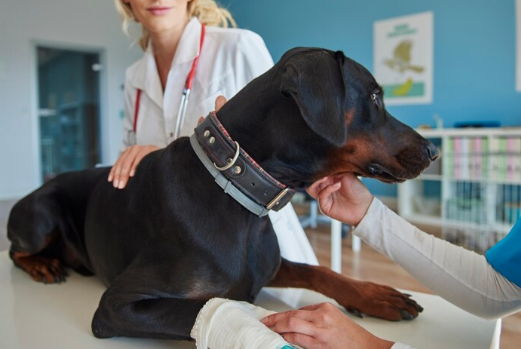
Epithelial injury:
The thin lining to the alveoli gets damaged as a result of the inflammation or
toxins.
Cellular response:
The immune cells like the macrophages produce cytokines like TGF-b
(Transforming Growth Factor-beta), which in turn causes fibroblasts to become active.
Fibrosis development:
Fibroblasts increase and lay down thick collagen fibres substituting
normal lung tissue with scar tissue.
Structural remodelling:
The lung gets stiff with the formation of cavity-like patterns known as
honeycombing and the exchange of gases becomes inefficient.
Hypoxia:
Decreased diffusion of oxygen causes a low level of oxygen in the blood, which
causes pulmonary hypertension and ultimately the strain of the right heart (cor pulmonale).
Such a continued process of injury and abnormal repair is what renders the pulmonary
fibrosis irreversible and progressive. With further progression of the illness, lungs lose
their elasticity, breathing turns more exhausting, and oxygen supply of blood gradually
decreases.
Symptoms or Clinical Manifestations.
The symptoms are usually built up gradually and slowly, and are usually confused with
chronic bronchitis or heart disease at an initial stage. The clinical manifestations mostly
include:
- Chronic dry, coughing cough, which is not accompanied by mucus.
- Dyspnea, specially by following exercise or excitement.
- Higher rates of respiration at rest.
- Exercise intolerance, a dog would get tired easily or avoid exercising.
- A bluish color on the tongue or on the gums, which shows that they are deprived of
- oxygen.
- On listening to the chest using a stethoscope, the crackling (fine inspiratory crackles) are heard.
- As the disease progresses, weight loss and feeling tired.
➔ With further fibrosis, the dogs can develop orthopnea (the inability to breathe easily
when lying down) and need to breathe in with the help of constant effort. The dog may
sleep in a sitting or sternal posture and this may be observed by its owners to help the
dog breathe easily.
Diagnosis and Clinical Evaluation.
Canine Idiopathic Pulmonary Fibrosis (CIPF) may be a difficult disease to diagnose, since its
symptoms are similar to many other respiratory and cardiac diseases. It may be done by
eliminating possible other causes of coughing, shortness of breath and intolerance to exercise.
To make the correct diagnosis, a physical examination, imaging methods, laboratory results,
and in some cases, biopsy are all in use.
Physical Examination
A veterinarian will then conduct a complete clinical examination during the first examination. The
pulmonary fibrosis in dogs are normally associated with normal heart rate and is characterized
with rapid rate of respiration, and observable huffing during respiration. When a stethoscope is
used, fine crackling is commonly observed in the lower lung fields (inspiratory crackles). These
crackles happen because the collapsed and stiff alveoli are opened during the inhalation.
The mucous membranes can be pale or bluish (the lack of oxygen, hypoxia). Others exhibit mild
fever or loss of weight because the disease is chronic. At more severe stages, pulmonaryhypertension can lead to indicators of right-sided heart failure; including the accumulation of
fluid in the abdomen (ascites).
Imaging Techniques
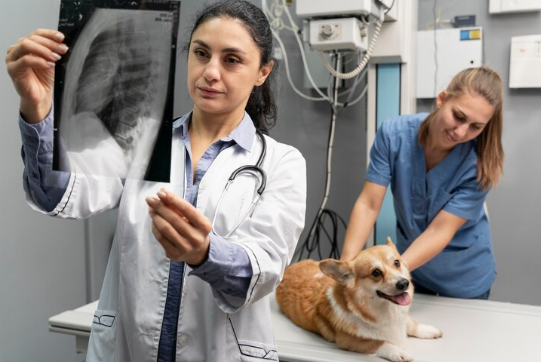
➔ Thoracic Radiography (X-rays)
The diagnostic test that is usually taken is the chest X-rays. Radiographs in pulmonary fibrosis
are usually of diffuse interstitial or reticular pattern particularly in the dorsocaudal lobes of the
lungs. This is a hazy appearance of the lungs, that is, there is evidence of damaged alveolar
walls through scarring and thickening. With time, the lungs can also be seen to be smaller
because they lose their elasticity and volume.
● Nevertheless, fibrosis cannot be ascribed by radiographs. They are only able to
recommend it in line with the clinical presentation and breed predisposition.
➔ High-Resolution Computed Tomography (HRCT)
Computed tomography is the most precise non-invasive technique of identifying pulmonary
fibrosis in dogs. In HRCT, lung structure could be transparently observed, with ground-glass
opacities, reticular lines, traction bronchiectasis, and honeycombing, which are qualities of
fibrotic remodelling. These characteristics can be used to specify CIPF among other diseases of
the lungs like pneumonia or tumors. CT imaging is mostly common in specialized veterinary
centers and now is the gold standard of diagnosis.
➔ Bronchoscopy and Bronchoalveolar lavage (BAL).
A device used in observing the bronchial passages is the bronchoscopy that is a small camera
that is inserted into the airways. To examine the cellular components a fluid sample could be
taken (BAL). In dogs with CIPF, BAL usually shows low cellularity which means that no infection
or acute inflammation occurs. The test contributes to the elimination of chronic bronchitis,
pneumonia, or parasitism.
➔ Lung Biopsy
The most conclusive method of diagnosis is histopathology of lung tissue. Biopsy shows
thickening of the interstitium, growth of fibroblasts, deposition of collagen, and distortion of the
alveoli. Nevertheless, lung biopsy is only used in cases in which other diagnostic tools have
failed to give conclusive results because of the invasiveness of the procedure as well as the risk
of anesthesia in dogs with compromised respiratory system.
➔ Blood Tests
Normal bloodwork can fail to indicate certain abnormalities but polycythemia (increased red
blood cell count) can be a result of the body balancing out chronic oxygen deprivation. Blood
gas examination could reveal hypoxemia (low arterial oxygen).
➔ Echocardiography
Echocardiography is applicable to assess the functioning of the heart since pulmonary
hypertension is often associated with CIPF. It is capable of detecting enlargement of the heart of
the right ventricle and the thickening of the walls of the pulmonary vessel, which proves the
presence of secondary complications.
➔ Pulmonary Function Testing
Pulmonary function tests (PFTs) are uncommon in the general veterinary practice but are
valuable in terms of the lung capacity and compliance. Pulmonary fibrosis dogs indicate that thetidal volume is less, compliance diminishes, and ventilatory has a restrictive pattern. These
results validate that expansion and gas exchange is restricted by stiffness of the lungs.
➔ Differential Diagnosis
Chronic coughing or difficulty in breathing among dogs is not due to pulmonary fibrosis only.
Thus, the clinicians, or veterinarians, should distinguish between CIPF and other forms of
respiratory and cardiac diseases before the diagnosis is established. The primary diseases,
which resemble pulmonary fibrosis, are:
● Chronic Bronchitis:
It is also long-term inflammation of the bronchi, which is characterized by a cough similar to
CIPF. Bronchitis, however, tends to comprise of airway thickening, mucus secretion and
responsive inflammation, whereas fibrosis is characterized by permanent scar.
● Bacterial/Fungal Pneumonia disease:
Pneumonia causes productive cough, fever and local lung consolidation that is seen on the
radiograph. On the contrary, fibrosis is not associated with mucus production and has a diffuse
interstitial pattern.
● Pulmonary Neoplasia (Lung cancer):
Tumors can have a distinct nodular representation or lobar consolidation in imaging, fibrosis
can be visible with no known lesions but as diffuse scarring.
● Heartworm Disease:
Being triggered by Dirofilaria immitis, this condition leads to the thickening of the pulmonary
artery and the enlargement of the right heart which may be similar to the symptoms of fibrosis.
Blood antigen tests are used to eliminate the possibility of heartworm infection.
● Congestive Heart Failure (CHF) disease:
CHF may bring about pulmonary edema that results in cough and shortness of breath.
Radiographs however in CHF exhibit patterns of alveoli because of the presence of fluid and not
because of the fibrotic texture of CIPF.
Eosinophilic Bronchopneumopathy:
A cough and inflammation of the airways due to an allergic or immune-mediated process, which
can be differentiated by the BAL analysis that reveals eosinophilic inflammation.
Proper distinction between these disorders is important to make sure that treatment is properly
applied, and unnecessary treatments, including antibiotics or diuretics, are excluded.
Summary of Diagnostic Approach.
Diagnostic Tool:
Purpose,Findings in CIPF
Physical Exam:
Assess breathing and lung sounds,Crackles, tachypnea, cyanosis
X-ray of the chest: First imaging,Diffuse interstitial pattern.
HRCT: Affirm fibrosis Honeycombing, reticular lines.
BAL: Eliminate infection,Minimal cell count, sterile sample.
Biopsy Final diagnosis: collagen deposition, alveolar distortion
Echocardiography:Pulmonary hypertension identification,Right-sided hypertrophy of the
ventricles
Therapy, Habilitation, and Palliative Care.
However, unfortunately, no known cure is available to Canine Idiopathic Pulmonary Fibrosis
(CIPF). It is an irreversible disease that is progressive in nature, in the sense that once thefibrotic tissue has developed in the lungs then it cannot be reversed or replaced by normal
tissue. Thus, the treatment plans are designed to slow the disease course, decrease
inflammation and breathing problems, alleviate pain and increase comfort and life quality of the
dog.
Medical Management
a. Corticosteroids
Prednisone or prednisolone are prescribed to regulate the inflammation and prevent
immune-mediated damage to tissues in the early stages. Nevertheless, the efficacy of
corticosteroids in actual fibrosis is not much because the disease is mostly fibrotic and not
inflammatory. Other side effects of steroids which can manifest in the long term are weight gain,
thirst, muscle weakness, and liver strain. As such, their consumption needs to be closely
monitored and reduced by a veterinarian.
b. Bronchodilators
Drugs like theophylline, terbutaline and albuterol can be administered to help relax the airway
muscles and open the bronchi enabling breathing to be easier. Even though they do not reverse
fibrosis, they may decrease airway resistance and enhance oxygen delivery especially in dogs
with secondary bronchoconstriction.
c. Cough Suppressants
Coughing may be chronic which can be tiring and painful to the affected dogs. In order to
decrease the number of coughs, veterinarians can prescribe hydrocodone or butorphanol as
antitussives. This assists the dog in relaxing better, particularly during the night.
d. Antibiotics
In case of secondary bacterial infection, which is usually manifested by fever, nasal discharge,
or sputum changes, the broad-spectrum antibiotics are administered to manage the infection
and prevent additional lung damage.
e. Sildenafil Pulmonary Vasodilators (Sildenafil)
CIPF is also highly associated with pulmonary hypertension whereby the blood vessels in the
lungs constrict because of the resistance that increases. Sildenafil (Viagra(r)) is a drug
employed to dilate these vessels enhancing blood circulation and lessening the load on the right
side of the heart. This drug has the potential to bring great relief to the exercise tolerance and
the ease of breathing in a few dogs.
f. Immunomodulatory Drugs Antifibrotic Drugs.
Not yet generally acceptable in veterinary medicine, medications like pirfenidone and nintedanib
which have shown to be effective in human idiopathic pulmonary fibrosis are being
experimentally tested in dogs. These medications act by damaging the pathways involved in
collagen formation and fibroblasts growth which are likely to decrease the rate of fibrosis
progression.
Supportive Therapy
Since CIPF is an incurable condition, the management is based on supportive care. The goals
of supportive measures include maximization of oxygenation, reduction of stress and attention
to overall health.
a. Oxygen Therapy
Oxygen is used as an immediate relief in case of an acute respiratory distress or at an
advanced stage of the disease. It may be administered with nasal cannula, oxygen mask oroxygen cage within the clinic. In case of chronic cases, home oxygen concentrators can be
prescribed by the veterinarians. Although the oxygen therapy does not cure the disease, it can
greatly increase the comfort and can even prolong the life of a severely hypoxic dog.
b. Exercise and Management of weight.
It is important to maintain a perfect body weight. Obese dogs put extra strain on the respiratory
system and hence breathing becomes more challenging. Low intensity and gentle exercise
(walking short walks) is useful to keep muscles in shape with the least amount of strain. At this
point, the activities need to be immediately halted in case the dog starts to breathe heavily,
starts panting, or even collapses.
c. Nutritional Support
The antioxidant-balanced diet is beneficial against oxidative stress in the lungs. Omega-3 fatty
acids (contained in fish oil), vitamin E, vitamin C and selenium contain positive effects in
reducing inflammation and maintaining the immune system. Protein should also be of high
quality to avoid muscle withering, particularly when the dog is older and has less activity.
d. Environmental Control
The owners would need to reduce airborne irritants like cigarette smoke, aerosol, perfumes,
wood smoke, and dust. The frequency of coughing can be decreased by keeping indoor air
clean with the help of air purifiers and humidifiers. Dogs too must not be subjected to extreme
temperatures either hot or cold since they bring about respiratory distress.
e. Stress Reduction
Breathing rate and oxygen demand could be increased under stress and excitement. It is useful
to make the home atmosphere relaxed and silent and not to make the stressful circumstances
stressful or tiresome. Normal routine, cushioning of the bed, and quiet treatment assist in
sustaining the sense of wellness in the dog.
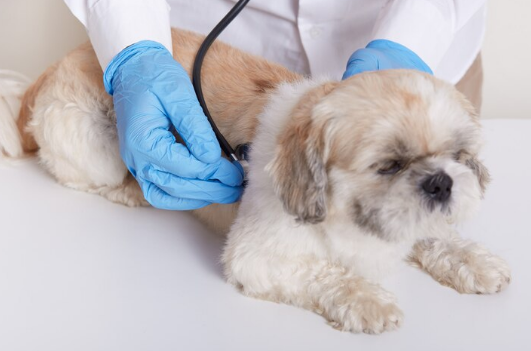
New and Novel Therapies.
Researchers in the veterinary field are also trying new and experimental methodologies that will
enhance the success of dogs with CIPF.
a. Stem Cell Therapy
The potential of mesenchymal stem cells (MSCs) was proven by the possibility to suppress or
promote immune responses, mitigate inflammation, and possibly regenerate damaged tissues.
Given that canine models, the oxygenation and lung compliance have been improved by a mild
degree with the use of stem cell infusion, the therapy is still experimental and expensive.
b. Argumentation and Anti-inflammatory Agents.
Additional antioxidants like N-acetylcysteine (NAC) are being studied in regard to their use in
the alleviation of oxidative lung damage. Although subject to some clinical trials lacking clinical
trials in veterinary medicine, anti-inflammatory compounds derived by plants, including curcumin
and resveratrol, have their potential.
c. Genetic and Molecular Therapy.
The molecular pathways that regulate the process of fibroblast activation and collagen
deposition are still under investigation. Drugs specific to block TGF-b signalling have the
potential to transform the therapy of fibrosis in dogs and humans. These therapies are however
in the experimental phase.
Monitoring and Follow-Up●
It is necessary to observe the development of the disease with regular visits to the
veterinary. Each time a visit is completed, the veterinarian usually evaluates:
● Respiratory rate and effort
● Pulse oximeter Oxygen saturation (SpO2).
● Body weight and muscle aspect.
● Indications of pulmonary hypertension through echocardiography.
Reaction to the drugs and potential drawbacks
It is recommended that the owners should take the resting respiratory rates at home. The
normal resting rate should not exceed 30 breaths per minute; the consistent rate of more than
40 is a sign of disease progression and it should be addressed immediately.
Prognosis, Prevention and Future Research.
● Prognosis
The prognosis of dogs with Canine Idiopathic Pulmonary Fibrosis (CIPF) is usually poor to
guarded based on the extent to which the disease has progressed at the onset of the disease
and the response of the dog to supportive care. Due to the irreversibility and progression of
fibrosis, the respiratory decline happens over months or years in most of the affected dogs.
In most instances, dogs are comparatively stable with a few months to pass before becoming
part of a more rapid degradation pattern with growing shortness of breath, fatigue, and frequent
coughing. When a critical amount of scarring occurs in the lungs, oxygen delivery is significantly
crippled, and chronic hypoxemia (low blood oxygen) occurs. Oxygen may be required constantly
by dogs at this stage.
In West Highland White Terriers (WHWTs), clinical studies on this disease have revealed that
the mean survival of the disease ranges between 12 and 24 months, although other dogs
survive longer with careful medical care and lifestyle changes. A care plan and early detection
will prolong the lifespan and enhance quality of life.
Quality of Life Reflections.
Granted that CIPF cannot be cured, it can be treated with kindness. This is intended to keep the
dog comfortable, reduce respiratory distress, and keep the happiness of the everyday life. The
owners are very important in this management process. Observing the rate of breathing,
tolerance to activity and sleeping pattern of the dog is also used to identify the early signs of the
worsening of the disease.
In severe cases where the breathing is too difficult even during rest or the cat is not enjoying
normal activities, despite therapy, then euthanasia can act as a humane mechanism to avoid
suffering. This must always be arrived at under the guidance of the veterinarian, on objective
clinical signs and the overall wellbeing of the dog.
Veterinarians can as well prescribe the use of palliative care like supplementation of oxygen in
the comfort of the house, anxiety relieving drugs as well as mild sustaining food. Pets with
terminal illnesses are getting more hospice programs that are able to give emotional advice to
the owners at this time.
Prevention and Risk deduction.
CIPF is idiopathic (meaning its exact cause is not known) and, therefore, it is hard to prevent.
Nevertheless, a number of preventive steps and risk-mitigating actions can be performed to
decrease the risk of developing or increased severity of lung disease in dogs.
a. Genetic Screening
Genetic predispositions are exhibited in breeds such as West Highland White Terriers,
Staffordshire Bull Terriers and Cairn Terriers. Other breeding habits like responsible breeding
can limit the occurrence of the disease in subsequent generations because the breed will not
mate with the dogs that are affected or carryers. Specific susceptibility markers are markers of
genetic testing that is an emerging area of veterinary genomics.
b. Environmental Protection
Chronic airway inflammation can be caused by environmental irritants like tobacco smoke, air
pollution, chemical vapors and household cleaning sprays. Good ventilation should be
incorporated by the owners and the environment must be smoke-free and low in dust. Harsh
aerosols and perfumes should not be used near the dog.
c. Infection Prevention
The inflammation can be aggravated and fibrosis enhanced by respiratory infections, and these
diseases, in particular, are chronic bacterial or viral bronchitis. To prevent infection of the lungs,
it is necessary to regularly vaccinate pets, visit the doctor, and treat respiratory infections in
time.
d. Nutrition and Lifestyle
The high-quality diet with high levels of antioxidants, omega-3 fatty acids, and moderate protein
levels can improve the strength of the immune system and decrease oxidative stress. Body
weight also lowers the respiratory effort through maintenance of optimum body weight.
Moderate exercise, slow walks, and so on are controlled and prevent deconditioning without
overworking.
Current and Future Research
Research in canine pulmonary fibrosis is a current field of study not only to benefit the dogs with
the condition but also since dogs can be used to study human idiopathic pulmonary fibrosis
(IPF). The studies are mutually advantageous as both disorders have similar pathological and
clinical presentations.
a. Comparative Pathology
Pathologists have found that fibrotic lung of dogs show the same honeycomb structure, foci of
fibroblasts, and alveolar collapse that occurs in IPF in humans. This similarity has enabled both
veterinary and medical researchers to cooperate in carrying out research.
b. Biomarker Discovery
To allow the earlier and more precise determination of diagnosis, scientists are examining
biomarkers including circulating cytokine, surfactant protein as well as gene expression profiles.
Early identification of the disease before the fibrosis becomes widespread could be followed by
measures to delay the progression.
c. Stem Cell and Gene Therapy
More sophisticated studies are being research on regenerative medicine. Mesenchymal stem
cells (MSCs) have been found to be able to reduce inflammation, and enhance tissue repair.
Techniques of gene therapy against fibrosis-stimulating genes (as TGF-b1 or PDGF) will
eventually stop the disease process. In as much as these are experimental approaches, they
hold promise of the future treatments.
d. Translational ResearchDue to the resemblance between canine and human pulmonary fibrosis, many pharmaceutical
studies are translational dogs as research models to test emerging antifibrotic drugs. The
findings would be the first step towards treatments that would be beneficial to both species.
Emotional Support and Education of the owner.
It is emotionally difficult to treat a dog with CIPF. Despair and helplessness is common in
owners when they see their loved being work hard to breathe. Thus, the two crucial
elements of the care plan are education and emotional support.
Veterinarians are required to clear points:
The progressive and chronic character of the disease.
Which clinical manifestations are there of respiratory distress or degradation?
The correct administration of oxygen therapy and medication.
Indications of when to take a pet to the emergency veterinary
Online communities, support groups and pet hospice networks are useful in offering
support and advice to families dealing with chronic illness in their pets. The experience
can be shared, thereby reducing emotional stress and making informed decisions which
can assist the owners in situations that they are currently going through.
Conclusion
Dog Pulmonary Fibrosis, especially Canine Idiopathic Pulmonary Fibrosis (CIPF) is a severe, chronic respiratory syndrome that is characterized by scarring of lung tissues. Despite the fact that it is incurable, the quality of life of afflicted dogs can be greatly improved because of early diagnosis and special care. With the help of veterinary treatment, home care, adequate nutrition, and humane supervision, a large number of dogs will be able to live a comfortable life even longer. The future of this disease is in the potential to make breakthroughs in the ongoing scientific research, particularly in stem cell research and genetic therapy which will one day be able to alter the direction of this disease. Finally, education of dog owners and veterinarians remains the key of improvement. The effect of pulmonary fibrosis on the health of dogs can be mitigated by identifying the early signs of the condition, reducing environmental exposure risks, and seeking breeding responsibilities. Science and compassion might in time be utilize together to relieve many dog and to give hope to people who like dogs.