
Introduction
Sister illnesses of mediastinal diseases and pneumonia affect the lungs and the mid portion of the chest. Pneumonia is the lung infection, which may lead to severe and even deadly complications in case it extends to the mediastinum which is the middle of the thoracic cavity. Knowledge about these conditions facilitates early diagnosis, prevention and treatment. This article outlines the most effective ways of prevention and management with modern medical care and awareness, pneumonia developmental mechanisms, and the manner in which it may affect the mediastinum.
What Is Pneumonia?
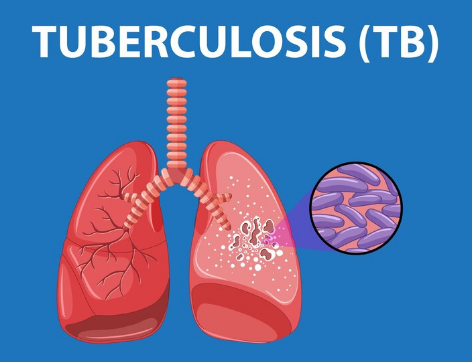
Pneumonia is an infection that causes inflammation of the alveoli of either one or both lungs. When they fill up with fluid or pus these air sacs make it hard to breathe. Bacterial pneumonia is the most common and destructive type of pneumonia despite the fact that it may be caused by viruses, fungi or bacteria. Pneumonia can affect all ages, though babies, the aged, and individuals having weakened immunity are all prone to the condition. There are serious side effects such as pleural effusion or mediastinal extension caused by failure to treat promptly.
Causes of Pneumonia
The major causes of pneumonia are the infectious microorganisms that gain access to the lungs by inhalation.
Bacterial causes include Staphylococcus aureus, Haemophilus influenzae and Streptococcus pneumoniae.
Examples of the viral causes are the COVID-19 virus, influenza virus, and respiratory syncytial virus (RSV).
Patients with weak immune systems may have Aspergillus or Histoplasma species as a causative agent.
Chemical fumes or liquid aspiration into the lungs may also at times cause pneumonia. By identifying the cause, doctors are able to select the most appropriate antibiotics or antivirals so as to have a successful recovery.
Symptoms of Pneumonia
The symptoms of pneumonia depend on the nature of the pathogen used, age and immunity of the patient. Some of the most common symptoms include:
chills and a high fever
Extensive pus or mucus chronic coughing.
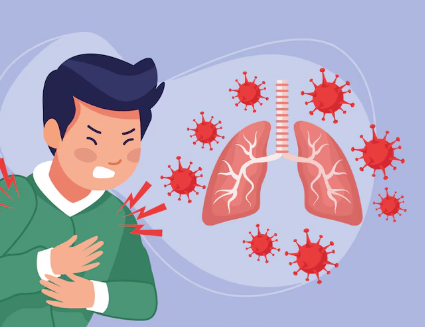
Pain to the chest, made by coughing or deep breathing.
Soon breathing, difficulty breathing.
Slowness, disorientation or fatigue (especially among the elderly)
These symptoms should be noticed early and medical care addressed in order to prevent complications that would expand to the other parts of the body including the mediastinum.
Types of Pneumonia
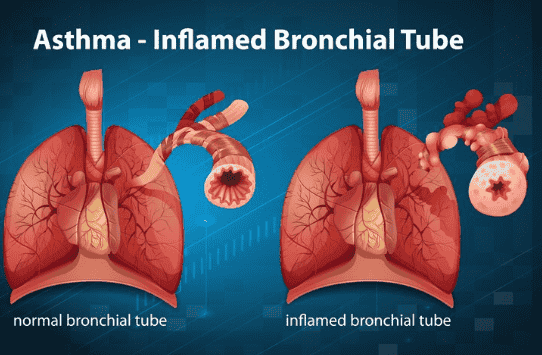
Depending on the site and mechanism of manifestation, pneumonia can be classified into a number of categories:
One of such bacteria that cause community-acquired pneumonia (CAP) is S. pneumoniae that often develops out of hospitals.
Hospital-acquired pneumonia (HAP) develops during a hospital stay; it is more often more severe and of an antibiotic-resistant nature.
Mechanical ventilated patients are prone to ventilator-associated pneumonia (VAP).
Aspiration pneumonia- This is caused by particles of food, vomit or saliva penetrating the lungs.
In spite of the fact that each type is treated differently, when untreated, all types of the diseases may cause severe chest complications.
Diagnosis of Pneumonia
The initial steps in diagnosing a patient are a medical examination and a patient history. A chest X-ray is the most requested in order to verify pneumonia. The precise microorganism is identified by the use of sputum cultures, and the extent of infection is identified by blood tests. A CT scan will provide a clear lung image in complicated cases to check whether it is mediastinal or abscessive. The possibility of the infection spreading further into the chest cavity is minimized by early and accurate diagnosis which ensures that they are treated on time.
Treatment of Pneumonia
The course of treatment depends on the severity and the cause of the infection. Bacterial pneumonia is treated with antibiotics, whereas viral pneumonia can be treated with supportive care and antiviral drugs. Fluids, oxygen therapy, and rest will also be required. In the extreme case, hospitalization and mechanical ventilation may be required. Besides healing the infection, early treatment prevents its way to the mediastinum or irreversible damage to the lungs.
Prevention of Pneumonia
Prevention of pneumonia is far much better than cure. The most appropriate preventive measures are the following:
Immunization The pneumonia risk is greatly reduced with influenza and pneumococcal vaccinations.
Good hygiene: Washing off hands often prevents the transmission of bacteria and viruses.
A well-balanced lifestyle Vigorous activities, nutritious food, and cessation of smoking boost the immune.
Respiratory infection Treatment Respiratory infections should be treated as early as possible: Bronchitis or mild colds can be treated early to prevent the development of pneumonia.
Through precautions, there is avoidance of infections in lungs and mediastinal region.
What Is the Mediastinum?
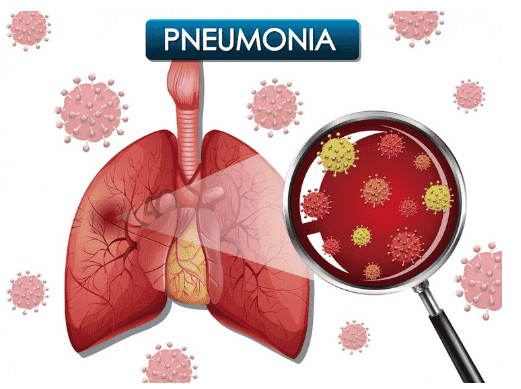
So, right smack in the center of your chest, between your lungs—that spot’s called the mediastinum. It’s kind of the VIP lounge for your heart, the aorta, thymus, trachea, esophagus… honestly, a whole bunch of major players just hanging out together. The mediastinum isn’t just one big space either—it’s split into the front, middle, and back sections, each with their own stuff crammed in. Because it’s so close to the lungs, if you get a nasty lung infection (think pneumonia), the germs can sneak over and cause a wicked problem called mediastinitis. Trust me, you don’t want that.
Diseases of the Mediastinum
So, a bunch of things can mess with your mediastinum—it’s basically like prime real estate in your chest, so trouble here isn’t exactly rare. You can get mediastinitis, which is just a fancy way of saying the tissue in there is pissed off—usually because of an infection or some sort of inflammation.
Then you’ve got tumors. Thymoma, lymphoma, germ cell tumors—you name it, and yeah, some of those can be either “no big deal” or “oh crap, that’s cancer.” Life keeps you guessing, huh?
Let’s not forget abscesses and cysts, which are basically your body’s way of saying, “Hey, let’s store some pus right here for fun.” Usually a leftover mess from an infection.
Enlarged lymph nodes? Oh, those pop up with stuff like sarcoidosis, TB, or cancer. Not exactly a party.
The wild part is, the mediastinum is packed with super important stuff—heart, big blood vessels, stuff you’d rather not mess with. So even a tiny infection or a little bump in there can turn ugly fast if it’s not caught early. Basically, it’s one spot you don’t want drama.
Link Between Pneumonia and Mediastinum
Yeah, so, lungs are usually ground zero for pneumonia, right? But if you just let it fester, those sneaky bacteria can totally leak out and hitch a ride through your lymph or blood—next thing you know, they’re crashing the party in other tissues nearby. Sometimes, if you’re really unlucky, the infection worms its way into the mediastinum (that’s the area smack dab in the middle of your chest), and bam—you’ve got yourself a nasty condition called mediastinitis. Honestly, this kind of mess usually happens when pneumonia gets complicated, like if you end up with a pleural infection or some gross abscess that breaks through into new territory. So, for real, don’t mess around—deal with pneumonia fast, or you might be dealing with way worse.
What Is Mediastinitis?
So, mediastinitis—yeah, that’s one you really don’t want to mess with. It’s basically a nasty infection that sets up shop right in the middle of your chest, between your lungs. Usually, it crashes the party after something like a ripped esophagus, chest surgery, or when pneumonia gets out of hand. The main troublemakers? Good ol’ Staph aureus and Streptococcus, like they don’t already cause enough problems.
If someone’s got it, they’ll probably be feeling like absolute garbage—think crushing chest pain, sweating buckets, spiking fevers, struggling to breathe, the whole awful package. And if doctors drag their feet with treatment? Honestly, it could be game over. That’s why anyone dealing with pneumonia needs to be under a sharp eye, just in case things start to go south.
Symptoms of Mediastinal Infection
Mediastinal infections? Oh, those are a whole different beast compared to your average lung infection. We’re talking about nasty chest pain that can shoot right into your shoulders or even your back—definitely not the kind of ache you can just sleep off. Breathing gets rough, swallowing feels nearly impossible sometimes.
Then there’s the lovely combo of chills, fever, that drained, wiped-out feeling where even getting out of bed feels like a marathon. If things get really wild, your heart might start racing (hello, tachycardia) and your blood pressure can drop like a rock. Not exactly something you want to mess around with at home. Honestly, these symptoms scream “get me to a hospital, stat” because this is absolutely a medical emergency. No time for stubbornness—go see a doctor, fast.
Diagnosis of Mediastinal Diseases
So, there’s a whole toolkit doctors whip out when they’re trying to figure out what’s happening in the mediastinum (that little slice of real estate wedged between your lungs, in case you spaced out in anatomy class). Usually, the first move is to shove you into a CT or MRI machine—think of those as the high-def cameras of the medical world. These things catch stuff regular X-rays just dream about: tumors, infections, random gooey abscesses, you name it. Sometimes they’ll go the extra mile and do an echocardiogram, just in case your heart’s being a little drama queen and causing trouble.
Spot something sketchy? Out comes the biopsy needle. Yep, they’ll snag a chunk of tissue to peek at under a microscope, CSI style, to see what’s really lurking in there. And blood tests? Oh, please. Like they’d skip those. Docs are always fishing for clues in your blood—signs of infection, inflammation, the usual suspects.
Bottom line, catching this junk early is massive. Docs can swoop in before things spiral, which honestly can be the difference between a minor scare and a total nightmare. So yeah, early testing? Not just important—kinda non-negotiable.
Treatment of Mediastinitis
How bad the mediastinitis is—and what started it—totally changes how doctors handle it. If it’s a bacterial thing, they usually hit fast with some heavy-duty antibiotics. But if there’s gross stuff like abscesses or pockets of gunk hanging around, yeah, you’re looking at surgery to drain it out. Supportive care is a big deal too—think oxygen, IV fluids, making sure folks actually get enough nutrition, all that jazz. Oh, and if someone’s bouncing back from pneumonia? Docs gotta keep a sharp eye on them to catch any signs the infection’s trying to creep into the mediastinum. Can’t let that one slide.
Complications of Pneumonia and Mediastinal Diseases
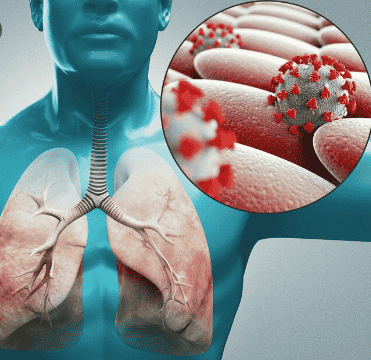
Look, if you just ignore pneumonia or those nasty mediastinal infections, you’re basically playing with fire. Things can get ugly fast.
Sepsis? That’s when your infection decides to take a road trip through your bloodstream. Not fun.
Empyema? That’s just a fancy way of saying your lungs start collecting pus. Gross and dangerous.
Then there’s respiratory failure—your lungs just tap out, and suddenly you can’t get enough oxygen.
If swelling hits your mediastinum, it might squash your heart or those big vessels. Yeah, your heart actually gets squeezed. Not ideal.
Honestly, you don’t want to mess around with this stuff. Spot the warning signs early and get yourself to a doctor, pronto. Don’t try to tough it out—these are not the kinds of problems that just “clear up on their own.”
Prevention of Mediastinal Infections
Honestly, if you wanna dodge mediastinal infections, you gotta tackle what’s causing ’em in the first place. Don’t mess around with pneumonia—treat it fast. Chugging along with a solid immune system helps too, obviously. Oh, and after any surgery, don’t slack on hygiene. Seriously, those germs are just waiting for a chance.
Vaccines? Total lifesavers. They cut your chances of getting pneumonia, which means less risk of stuff spreading to your mediastinum (that bit in the middle of your chest nobody really thinks about until it goes haywire). Also, maybe lay off the cigs and don’t drown your liver in booze. Docs give advice for a reason after surgery—maybe actually listen this time. Trust me, you don’t want to deal with this kind of infection.
Modern Advances in Diagnosis and Treatment
Honestly, diagnosing and treating pneumonia or mediastinal stuff is lightyears ahead of where it used to be. Docs can spot infections way sooner now, thanks to those super-sharp CT scans. And if there’s crap like an abscess hanging around, they don’t have to slice you open like it’s the dark ages—they’ve got minimally invasive tricks for that. Picking antibiotics? Not a guessing game anymore. They actually figure out what bacteria you’ve got and go after it with the right meds (finally). Plus, let’s not forget vaccines—huge drop in pneumonia deaths worldwide, all because of shots and people actually knowing what the heck pneumonia is now. With all this, a full recovery isn’t just wishful thinking. It’s actually pretty doable. Science, man.
Role of Immunity in Protection
Alright, here’s the deal—your immune system’s basically the bouncer at the club, kicking out any nasty bugs that try to crash the party (think pneumonia or those gnarly mediastinal infections). Want your body’s defenses on point? You gotta feed it well, move around a bit (yes, even when you’d rather Netflix), and actually get some shut-eye. Seriously, skip the smokes—it’s not doing you any favors. If your immune system’s already a bit wobbly, or you’ve got something chronic going on, don’t skip those vaccines and check-ups. At the end of the day, a strong immune system’s your best shot at booting out infections before they get comfy, and bouncing back way faster if you do get sick.
Public Awareness and Health Education
Honestly, a lot of folks just brush off those early coughs or chest pains—until things get ugly. If we really want to keep pneumonia and stuff like mediastinal diseases in check, people have to actually know what’s up. I’m talking real-deal awareness, not just some poster in a clinic. Getting the word out, rolling out vaccines, pushing for regular check-ups—yeah, all that jazz actually helps. When people realize pneumonia isn’t just a “bad cold” and can totally mess with your chest and even your wallet, they’re way more likely to get help early. Saves lives, saves money, saves everyone a lot of trouble.
Conclusion
Look, if you actually want to get a handle on pneumonia and those weird mediastinal diseases (yeah, try saying that three times fast), you gotta get people to actually care. Most folks just brush off a cough or feeling winded—until things get seriously ugly. That’s how people end up in the ER, clutching their chests, wondering when it all went sideways. Honestly, stuff like vaccine campaigns, regular checkups, and just talking about these illnesses out loud can make a huge difference. When people realize pneumonia isn’t just a “bad cold” and that it can mess with more than just your lungs—like, hello, mediastinal infections—they’re gonna be way quicker to get checked out. Saves lives, saves cash, and saves a whole lotta unnecessary drama.